About the Museum
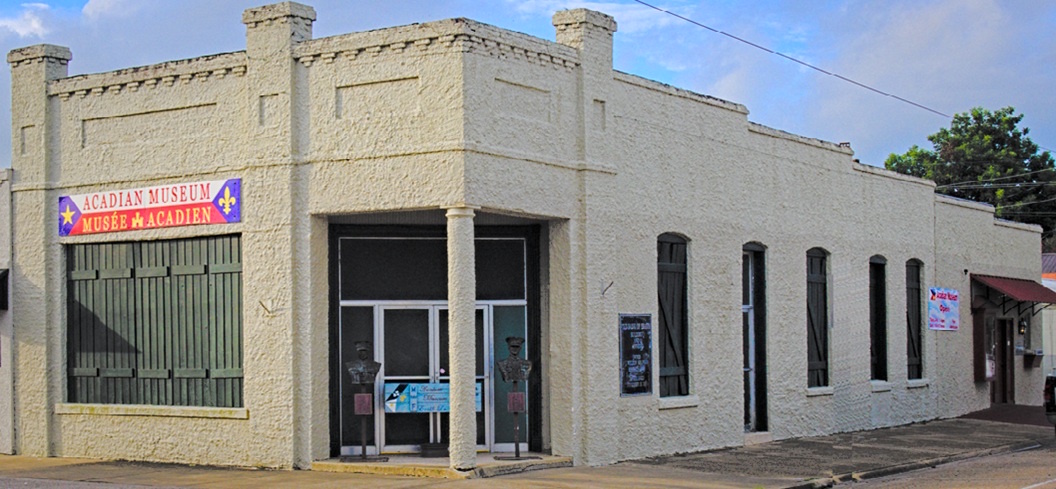
Photo by Michael Hebert.
Our Mission
The Acadian Museum strives to preserve a culture and heritage that has endured for over 400 years, both here and in the far reaches of Canada. The unique Cajun/Creole culture, along with the Native American culture, are the only cultures that wholly developed in North America.
Who We Are
The Acadian Museum is located deep in the heart of Louisiana’s Cajun country, in Vermilion Parish, which has the highest concentration of French speakers of any parish in Louisiana. The term Cajun is the anglicized pronunciation of the French word ‘Cadien, which is what the Acadians called themselves when they arrived in Louisiana, as far back as 1764.
Our Acadian ancestors had first settled the lands around the Bay of Fundy (today’s Nova Scotia and New Brunswick) in 1604, 16 years before the Pilgrims arrived at Plymouth Rock. The Pilgrims’ grandchildren had gradually encroached on their lands over the next century and, by 1755, British forces had arranged the imprisonment and deportation of over 10,000 men, women, and children, loading them onto ships and scattering families among each of the major British colonies to keep them from regrouping. Those exiled from Nova Scotia back then are the genetic and cultural ancestors of today’s South Louisiana French-Acadian (or “Cajun”) people. After the Treaty of Paris in 1763, boatloads of these exiled Acadians began a migration to Louisiana, which was then a Spanish colony. The Acadian Museum was founded in an effort to keep that history and memory alive.
Organizational Structure
The Acadian Museum of Erath, a part of the non-profit Acadian Heritage and Cultural Foundation, Inc., was founded in 1990 to promote awareness and appreciation of the mixed Prairie/Bayou Acadian culture of Vermilion Parish, which has a larger percentage of French speakers than any other county in the United States. The museum preserves and displays material traces of the history and folklore of this region, featuring exhibits about Acadian/Cajun politicians, musicians, religion, folklore, military, ranching, trapping and traditional life ways, including both domestic skills and traditional outdoor occupations.